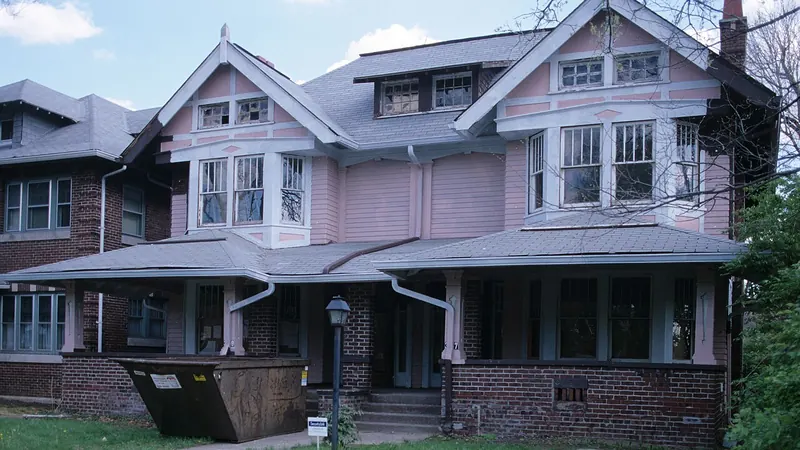
Snow on older roofs
How Much Snow Can the Roof of an Older House Hold?
Most roofs carry a normal Philadelphia-area winter without trouble. The risk rises with wet snow, rain on snow and ice, and on old framing that has been carrying weight for a century. Here's how to judge it.
- Snow and ice weights
- Warning signs
- Sources checked Oct 30, 2026
How much snow can a roof hold?
As a rough guide, most residential roofs that aren't damaged or decayed can hold about 20 pounds per square foot of snow before they're stressed. That's roughly 4 feet of fresh, fluffy snow, but only about 2 feet of old, packed snow. Wet snow, ice and rain soaking into snow all add weight fast.
Those figures come from the Insurance Institute for Business and Home Safety, as summarized by the Building America Solution Center (BASC). They are a homeowner's rule of thumb, not a rating for your house. Only a structural engineer can say what a particular roof frame is good for.
What snow and ice weigh on a roof
| What is on the roof | Approximate weight | Source |
|---|---|---|
| 1 foot of light, dry snow | About 3 lb per sq ft | FEMA P-957, via BASC |
| 1 foot of heavy, wet snow | About 21 lb per sq ft | FEMA P-957, via BASC |
| 10 to 12 inches of fresh snow | About 5 lb per sq ft | IBHS, via BASC |
| 3 to 5 inches of old, packed snow | About 5 lb per sq ft | IBHS, via BASC |
| 2 feet of old snow plus 2 feet of new | Up to about 60 lb per sq ft | IBHS, via BASC |
| 1 inch of ice | About 5 lb per sq ft | FEMA P-957, via BASC |
| 1 foot of ice | About 57 lb per sq ft | FEMA P-957, via BASC |
Figures from the Building America Solution Center's snow load guide, which cites FEMA P-957 (2013) and IBHS (2021). Accessed October 30, 2026. FEMA notes that snow in the East tends to be heavier than the drier snow of the West.
What are the warning signs of too much snow on a roof?
Watch for ceilings or rafters that visibly sag, creaking or cracking sounds from the roof, interior doors or windows that suddenly stick, and new cracks in plaster, walls or masonry. If you notice any of them during heavy snow, get everyone out of the house and call a professional engineer who assesses building structures.
That advice comes from FEMA's snow load safety guide as summarized by the Building America Solution Center (BASC). A roofer can't judge whether a frame is about to fail, and neither can we. If water is coming in through a damaged roof after the danger has passed, see storm damage help.
When to worry, and who to call
- Sagging ceiling, cracking sounds or doors that suddenly jam: leave the house and call a professional engineer
- A slope piling up much deeper than the rest, below a higher roof or between gables: watch it after each storm
- Rain falling on deep snow, or a freeze after a thaw: the load can rise even as the snow looks lower
- Ice building at the eaves and water staining a ceiling: a leak to deal with, covered on our storm page
Do older houses handle snow differently?
Often, yes. Houses built before modern codes were framed to older rules, or none, and decades of weight, leaks and rot can weaken rafters and roof boards. Later additions can make snow drift into new places. The Building America Solution Center notes that existing buildings built under older codes may be more at risk from heavy snow loads.
Weight that is already on the roof matters too. A slate roof is far heavier than asphalt, and extra layers of shingles laid over an old roof add more. Old House Roofing works on houses built before 1940 in Northwest Philadelphia, Cheltenham, Jenkintown, Merion Station and Narberth; our pre-1940 homes data shows the share by zip code.
Should I clear snow off my roof?
Usually not. Clearing snow is rarely needed except on older houses, roofs of doubtful construction or after an extraordinary buildup of heavy snow. If you do clear it, work from the ground and leave a layer behind so shingles aren't scraped loose. Never climb onto a snowy roof, and never walk on slate.
The Building America Solution Center warns that your own weight on an already stressed roof can make matters worse, and that removal should stop and the house should be evacuated if collapse is a concern. For a big job, hire an insured snow removal crew (BASC).
Does replacing slate with asphalt take weight off the roof?
Yes. Slate is far heavier than asphalt shingles, so once the slate comes off, the rafters carry less dead weight every day of the year, including under snow. That isn't a structural rating, and it doesn't make up for rotted framing. When we strip slate, the old roof boards are exposed, so decayed boards can be found and replaced.
See replacing a slate roof with asphalt for what the conversion involves, and slate roofs in winter for ice and snow on a slate roof you're keeping for now.
Heavy winter weather in Philadelphia and Montgomery counties
| NOAA event type | Records, 2011 to 2025 | When they began |
|---|---|---|
| Winter storm | 57 | 56 between November and March |
| Heavy snow | 17 | All between December and March |
| Ice storm | 5 | All in February |
Philadelphia and Montgomery County entries from the NOAA Storm Events Database (2011 through 2025, pulled October 29, 2026). A single storm is often logged in several zones, so read these as records rather than storms. The mid-October 2026 NOAA seasonal outlook leans mild and wet for the East this winter but gives no snowfall projection.
Snow load questions
My ceiling is sagging under heavy snow. What should I do?
Can a roofer tell me how much snow my roof can hold?
Is a warmer winter outlook a reason not to worry?
Sources and checked date
- Building America Solution Center (PNNL), Managing Snow Loads on Roofs and Decks snow and ice weights, warning signs, older buildings, citing FEMA P-957 and IBHS
- FEMA P-957, Snow Load Safety Guide (2013) original guide cited by BASC
- NOAA NCEI Storm Events Database Philadelphia and Montgomery county records, 2011 to 2025
- NOAA U.S. Winter Outlook, October 15, 2026 December 2026 to February 2027; no snowfall forecast
Last checked 2026-10-30.
Worried about the roof under the snow?
Tell us where the house is, how old the roof is and what it is doing. If you have photos, say so and we will ask for them by email. Outside our core area? Send the form and ask.
We answer form requests Monday to Friday, 9am to 5pm. There is no phone line, so the whole conversation stays in writing.