Guides · historic homes
What Are the Roofing Options for a Historic Home?
Four real paths, from keeping the roof you have to switching materials. Which one fits depends on what the roof is made of, how much of it shows from the street, and whether the house sits in a historic district.
- Slate, wood, metal, tile, asphalt
- National Park Service guidance
- Free inspection
What are the roofing options for a historic home?
There are four: keep and maintain the original roof, replace it in kind with the same material, switch to a substitute that imitates the original, or change to a different material such as architectural asphalt. The National Park Service's roofing brief says a visible substitute should match the original's scale, texture and color as closely as possible.
On a prewar house the right answer is rarely about the shingle alone. The deck, the flashing, the gutters and any historic review all shape what is practical. The table below sets the four paths side by side.
Four roofing paths for a historic house
| Option | What it means | Where it fits best | Who does the work |
|---|---|---|---|
| Keep and maintain | Fix broken units and flashing, keep the original material | Sound slate, tile or metal with isolated problems | A specialist in that material |
| Replace in kind | New slate, wood, tile or metal matching the original | Highly visible or patterned roofs; strict historic review | A specialist in that material |
| Substitute look-alike | Synthetic, composite or metal slate; treated wood; coated steel | Where the original can't be had or the weight is a problem | Installers who work with that product |
| Architectural asphalt | Layered asphalt shingles in a tone close to the original | Slate or worn roofs past repair, where the look can change | Us: we replace roofs with asphalt, including slate to asphalt |
Summary of National Park Service Preservation Briefs 4 and 29. Whether a historic body accepts any option is decided case by case; see our historic approvals guide.
Which roofing materials are original to prewar houses around Philadelphia?
Mostly slate, wood shingles and sheet metal. The Park Service's roofing brief notes slate stayed popular into the 1920s on Tudor Revival houses, Delaware Valley builders often used white pine shingles, and tin plate became the most common roofing once American rolling mills opened. Clay tile shows up on Mission and Romanesque Revival houses.
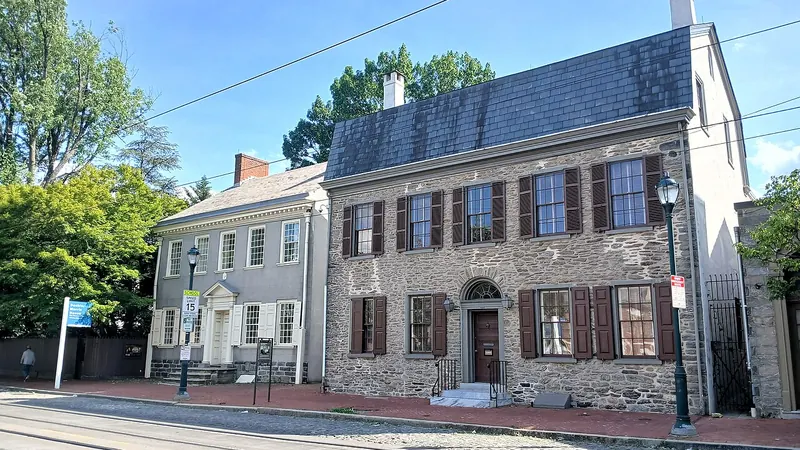
Philadelphia has some of the country's oldest examples. The same brief cites standing-seam copper on Christ Church (1727–1744), tin shingles laid in a herringbone pattern on the Arch Street Meetinghouse (1804), and William Penn's “Slate Roof House,” named because slate was so rare in the city at the time. Plenty of prewar houses in our area still have slate. Others had wood or slate replaced with asphalt decades ago, so the roof you see may not be the original.
How do you choose a roofing material for a historic house?
Start with how visible the roof is. The Park Service says a flat roof hidden from every side can take a modern system, but a roof seen from the street should keep its scale, texture and color. Then weigh condition, weight, slope, cost and any historic review, in roughly that order.
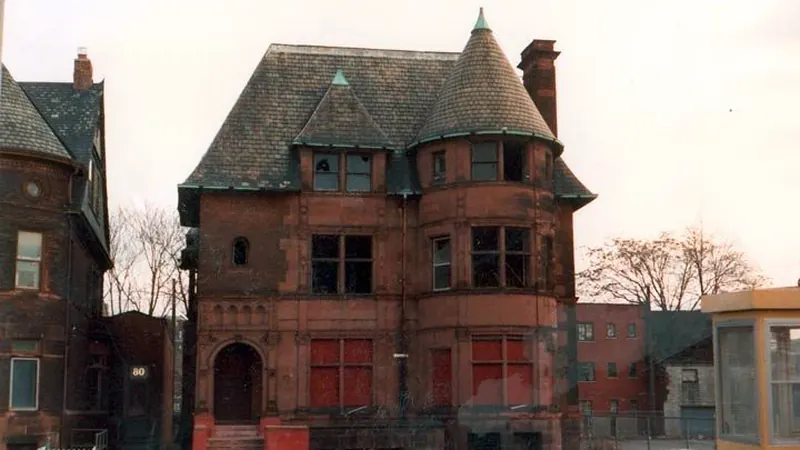
- Visibility. Steep front slopes, turrets, mansards and patterned slate carry the house's character. The brief warns that multicolored Victorian slate patterns can't easily be copied in a substitute.
- Condition. Sound slate with a few broken pieces is usually worth keeping. Our fix or replace guide walks through the signs.
- Weight and slope. Slate and tile are heavy; switching between materials can change what the framing carries, and every material has a minimum slope.
- Review. Designated houses and district properties need approval before the work. Our roof rules table covers each municipality we serve.
Is architectural asphalt a reasonable choice for a historic home?
Often, yes, when the original roof is past saving and the house is not under strict review. The Park Service lists asphalt shingles among the common substitutes meant to imitate slate, wood or tile. A thick, layered architectural shingle in a slate tone reads far closer to the original than a flat 3-tab.
This is the one option we carry out. We take off the old roof, fix the board deck where it needs it, replace the flashing and put on architectural asphalt shingles. For the details see replacing a slate roof with asphalt, and for prices see the roof cost data page.
What about metal, wood and slate look-alikes?
Each has a place. The Park Service lists lead-coated copper, terne-coated steel and aluminum-zinc coated steel as workable replacements for old tin, terne, zinc or lead roofs, and fire-retardant treated wood shingles for wood roofs, though treated wood can be brittle. Synthetic and metal slate are compared on our slate materials page.
We don't install any of these. If one is the right fit for your house, we'll say so and point you to a specialist. Our synthetic vs. natural slate comparison covers weights, ratings and published prices for the slate look-alikes.
What should you record before replacing a historic roof?
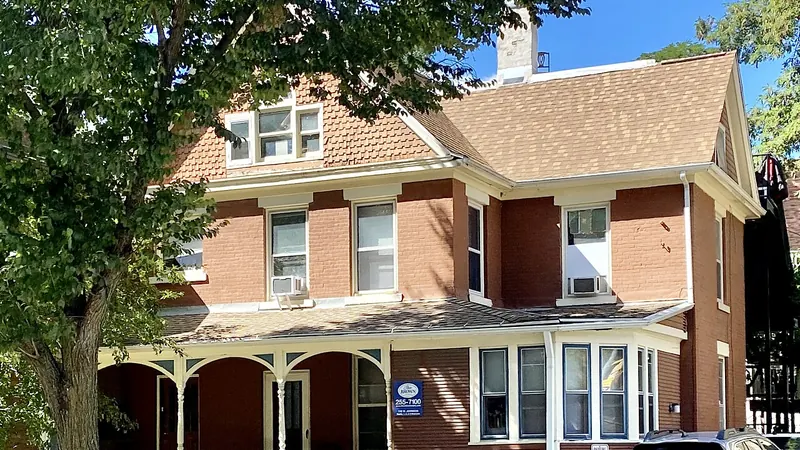
Photograph the whole roof and its details before anything comes off: gutters, flashing, dormers, chimneys, valleys, ridges and eaves, as the Park Service recommends. On slate, note the colors, any pattern and how the courses change from eave to ridge. Those records help a historic application and any future owner.
Look in the attic too. The brief notes that earlier roofing often survives as underlayment, in awkward corners, or as scraps left in an unfinished attic, and old nail lines on the boards can show what was there before.
Historic roofing questions
Can a historic house get a metal roof?
Are wood shingles allowed on a historic house?
Does a historic roof have to be replaced with the same material?
Which roofing option lasts longest on an old house?
Sources and checked date
- National Park Service, Preservation Brief 4: Roofing for Historic Buildings (Sweetser, 1978) historic materials, substitutes, recording
- National Park Service, Preservation Brief 29: The Repair, Replacement, and Maintenance of Historic Slate Roofs (Levine, 1993) slate lifespans
Last checked 2026-11-11.
Weighing roof options for an older house?
Tell us where the house is, how old the roof is and what it is doing. If you have photos, say so and we will ask for them by email. Outside our core area? Send the form and ask.
We answer form requests Monday to Friday, 9am to 5pm. There is no phone line, so the whole conversation stays in writing.